L'Algérie romaine les oasis de l'Erg occidental l'Oranie et le M'zab
Des sables rouges de Timimoun aux mosaïques de Djémila, l'Algérie dévoile mille ans d'histoire entre oasis mozabites et cités romaines.
Durée
15 jours
Saisons idéales
Fév, Mar, Oct, Nov, Déc
Style
Circuit accompagné
Confort
classique
Voyageurs
Couple, Solo, Entre amis, senior, groupe
L’esprit du voyage
L’Algérie, pays de contrastes, situé en Afrique du nord, s’étend sur une superficie de 2,4 millions de Km carrés. Des frontières longues de 7000 Km et six pays voisins. Au nord la mer méditerranée baigne 1200 km de littoral, au sud le Sahara immuable et vaste s’étend sur près de 2 millions de km carrés.
Le relief d’Algérie est composé de quatre ensembles : les chaines côtières du Tell, une suite de plateaux et de hautes plaines, une bande montagneuse méridionale l’Atlas Saharien prolongement du haut Altlas Marocain et la région Saharienne avec ses massifs montagneux, gréseux et basaltiques.
L’Algérie bénéficie d’un climat Méditerranéen et les hivers sont doux mais du nord au sud, il y a en vérité quatre climats ; humide, subhumide, semi-aride et désertique continental.
À travers ce voyage nous allons découvrir toute cette diversité qui fait de l’Algérie un pays continent.
Les étapes de votre voyage
Points forts
Itinéraire jour par jour

Arrivée à Alger, la première soirée dans la capitale
À votre arrivée à Alger, vous effectuez les formalités avant d’être transféré directement à votre hôtel. En soirée, vous profitez d’un dîner dans le centre-ville d’Alger, première immersion dans la capitale algérienne.

La Casbah d'Alger et notre Dame d'Afrique
Aujourd’hui, vous partez à pied à la découverte de la Casbah d’Alger, également appelée El Qasbah, en déambulant dans ses ruelles étroites et sinueuses.
Fondée au Xe siècle par Bologhine Ibn Ziri sur les vestiges de l’ancienne cité romaine d’Icosium, la Casbah témoigne de plusieurs siècles d’histoire. Elle connaît notamment son apogée durant la régence d’Alger, lorsqu’elle devient le cœur du pouvoir politique et économique des deys ottomans. Ses maisons blanches à plusieurs étages, ses palais et ses mosquées composent aujourd’hui encore le paysage de cette médina arabo-berbère.
Son histoire a été marquée par différentes présences étrangères, des Romains aux Ottomans en passant par les Français. Durant la guerre d’Algérie, la Casbah joue également un rôle important en devenant l’un des bastions des indépendantistes du FLN. Après l’indépendance en 1962, elle perd son rôle central mais demeure étroitement liée à l’histoire et à la culture algériennes. Vous parcourez ses ruelles labyrinthiques, ses escaliers et ses échoppes, tout en découvrant ses traditions artisanales et artistiques. La Casbah est notamment associée à la musique chaâbi, qui fait partie de son identité culturelle. Ses différents belvédères permettent également de prendre de la hauteur sur Alger et sa baie.
L’après-midi, la découverte d’Alger se poursuit par la place des Martyrs, avant la visite du Palais des Raïs, également appelé « Bastion 23 ». Aujourd’hui Centre culturel des arts, cet ensemble constitue le seul témoin de l’ancienne extension de la Casbah jusqu’à la mer.
Vous rejoignez ensuite les hauteurs d’Alger en véhicule pour visiter la basilique Notre-Dame d’Afrique. Si les conditions sont favorables, vous pourrez profiter de la fin de journée pour assister au coucher du soleil.

De la méditerranée vers le Gourara terre des sables
Transfert à l’aéroport pour votre vol vers Timimoun. À votre arrivée, vous effectuez les formalités avant d’être accueilli par le staff local, qui vous accompagne pour votre transfert vers une maison d’hôtes.
Vous rejoignez ensuite la palmeraie de Timimoun, en passant par les Ksour d’Tazzeggaret. La journée se poursuit par une balade dans les dunes, où vous prenez le temps d’admirer le coucher du soleil.

Timimoun la flamboyante au cœur du Tigourarine
Vous consacrez cette journée à la découverte de Timimoun et de ses environs. Surnommée l’Oasis rouge en raison de la couleur rouge ocre de sa terre et de ses maisons à l’architecture néo-soudanaise aux réminiscences africaines, Timimoun exerce une véritable fascination au cœur du Sahara.
Vous partez à la découverte de la ville de Timimoun, de son vieux ksar et de sa palmeraie. La ville se distingue par son urbanisme contrasté : d’un côté, le ksar, la palmeraie et les foggaras, témoins de la tradition ; de l’autre, la ville coloniale et ses extensions modernes, marquées par le style néo-soudanais. Le ksar est un village fortifié qui abrite encore une population active et dynamique.
Dans l’après-midi, vous rejoignez le lac salé asséché, la Sebkha, puis passez par plusieurs ksour à l’architecture défensive, notamment Ighzer, Ouled Saïd et Aghlad. La palmeraie est connue pour ses dattiers, qui produisent des fruits savoureux et variés.
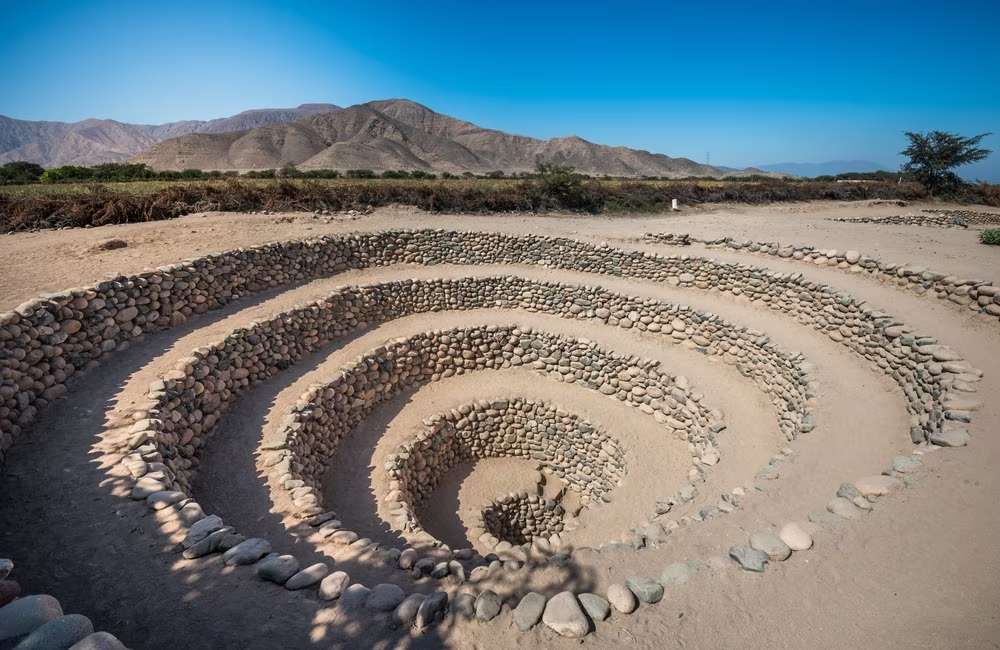
Vous découvrez également le système d’irrigation des foggaras, un dispositif ingénieux permettant d’acheminer l’eau souterraine par drainage sur de longues distances, à travers des puits et des tunnels. Indispensables à la vie de l’oasis, les foggaras assurent l’irrigation des cultures vivrières et des vergers. Leur importance est telle que certaines portent les noms de personnalités religieuses éminentes qui leur ont accordé leur bénédiction.

El Ménia le village fortifié Ksar El Goléa
Vous prenez la route en direction d’El Ménia, sur un itinéraire qui traverse les paysages désertiques entre Timimoun et El Ménia. Au fil du trajet, le décor évolue, des sables de la Gourara aux regs austères du plateau du Tademaït, vous plongeant pleinement dans la splendeur et le mystère du désert. Vous rejoignez ensuite la Transsaharienne pour poursuivre votre route jusqu’à El Ménia. À votre arrivée, installation dans une maison d’hôtes.

De Taourirt la citée disparue à la vallée du M'zab
El Ménia offre une immersion dans l'histoire saharienne. Son Ksar, exemple d'architecture traditionnelle, comprend le caravansérail au pied de la colline, le village sur la pente et les tours de guet. Ils évoquent la vie communautaire du désert, mêlant commerce et sécurité.
L'église Saint Joseph des années 1930 et la tombe de Charles de Foucauld de 1929 sont des repères importants. Un guide accompagne les visites, révélant l'authenticité de cette oasis imprégnée de tradition saharienne. Chaque coin, bâtiment et monument narre une histoire riche en résilience et culture dans cette oasis.

La vallée du M'zab une civilisation Intemporelle
Découverte de la ville de Ghardaïa, la place du marché, visite guidée de la ville sainte de Beni Izguen. Une architecture admirable, une culture sans pareille, une société viscéralement et volontairement commerçante, un tissage symbole féminin vibrant et coloré qui exprime la civilisation hors pairs de la pentapole mozabite.
Nous découvrons la fascinante région du M'Zab, où le plateau a servi de refuge aux Berbères ibadites il y a environ un millénaire. Ils y ont érigé des ksours d'une beauté singulière. Dans ce système de vallées organisées autour de l'oued M'Zab, comprenant Ghardaïa, Beni Izguen, El Atteuf, Bou Noura, et d'autres. Toutes ces cités perchées sur des collines se distinguent par leur architecture mozabite sobre et charmante.
Les palmeraies de la région sont de véritables villes-jardins, offrant un refuge lors des fortes chaleurs. Leur survie dépend d'un système ingénieux utilisant des puits profonds et des barrages le long des oueds pour maximiser l'utilisation des rares précipitations. Des canaux ramifiés assurent ensuite une répartition équitable de l'eau au sein des oasis.
Transfert à l’aéroport de Ghardaïa pour votre envol vers Constantine. Vous arrivez à Constantine en fin d’après-midi, où vous êtes accueilli avant le transfert à votre hôtel.

De Cirta à la Pompéi de l'Afrique du Nord
Départ le matin en excursion pour la découverte de la cité antique de Timgad, situé à au sud de Constantine.
Timgad, également connue aussi sous le nom de Thamugadi, est une ancienne cité romaine située dans le nord-est de l'Algérie. Fondée par l'empereur Trajan en 100 après J.-C., Timgad est un exemple de planification urbaine romaine. La ville a été érigée comme une colonie pour les vétérans de l'armée romaine, et son plan est basé sur un schéma orthogonal typique de l'urbanisme romain. L'une des caractéristiques les plus remarquables de Timgad est son plan en damier, avec des rues rectilignes qui se croisent à angle droit. La ville était dotée de nombreuses structures impressionnantes, dont un arc de triomphe dédié à Trajan, un théâtre, un forum, des thermes, des temples et des maisons richement décorées. L'ensemble architectural était conçu pour refléter la grandeur et la puissance de Rome.
Timgad a prospéré pendant plusieurs siècles en tant que centre administratif, commercial et culturel de la région. Cependant, au cours des siècles, la ville a été abandonnée. Elle a été redécouverte au XIXe siècle, ce qui en fait l'un des sites archéologiques romains les mieux préservés au monde. Aujourd'hui, Timgad est inscrite au patrimoine mondial de l'UNESCO. Nous déambulons dans ses ruines bien conservées qui offrent un aperçu fascinant de la vie dans une cité romaine florissante, avec des rues, des bâtiments et des sculptures qui témoignent de l'ingénierie et de l'art romains.

Tiddis un chef d'œuvre de l'architecture Romaine
Départ pour la ville de Tiddis, située à 30 kilomètres de l’antique Cirta l’actuelle Constantine,
La ville Romaine de Tiddis se dresse sur un piédestal rocheux, faisant d’elle une forteresse imprenable. Si au début de l’occupation Romaine, la Republica Castalli Tidditanorum était un camp militaire, la caserne se transformera vite en charmante cité qui subira plusieurs modifications architecturales. L’urbanisme Romain à Tiddis est un chef d’œuvre de virtuosité et de prouesses exceptionnelles que nous pouvons observer à travers ses vestiges encore bien conservés. Les Romains exploitaient également l’argile, dont la région en est très riche, ce qui a valu la richesse de Tiddis. Ce site archéologique revêt l’empreinte de plusieurs civilisations qui se sont succédé en Afrique du nord, dont les civilisations Berbère Punique, Romaine, Chrétienne et Musulmane.
En fin de journée, vous reprenez la route pour rejoindre Constantine.

De Cuicul la Romaine à Djémila un creuset de civilisations
Départ de Constatntine le matin pour rejoindre Djémila. Visite de la ville pour la découverte de ses histoires.
Djémila, qui signifie "la belle" en arabe, est un site archéologique exceptionnel qui témoigne de la splendeur de la civilisation romaine en Afrique du Nord. Perchée à 900 mètres d'altitude, dans une région montagneuse, elle domine un paysage magnifique, où se mêlent le vert des oliviers et le rouge de la terre. Ce sont les habitants ont donné le nom de Djémila à l'ancienne ville romaine de Cuicul, de son appellation originelle, fondée au 1er siècle après J.-C. et prospère jusqu'au 5ème siècle.
Le site archéologique de Djémila possède des monuments remarquables, qui illustrent l'adaptation de l'architecture romaine à un environnement particulier. On peut y admirer un théâtre, deux forums, des temples, des basiliques, des arcs de triomphe, des rues pavées et des maisons décorées de mosaïques. On peut aussi y découvrir des vestiges de la période chrétienne, comme une basilique et un baptistère. Djémila est un lieu chargé d'histoire et de culture, qui reflète la diversité et la richesse du patrimoine algérien.
Djémila est classé au patrimoine mondial de l'UNESCO depuis 1982, pour son caractère unique et sa conservation exceptionnelle.

Des hauts plateaux de Sétif à Oran la Radieuse
Transfert à l’aéroport de Sétif Aïn Arnat pour votre départ vers Oran. À votre arrivée, vous partez pour une balade à travers la ville.
La découverte commence par la place de la mairie d’Oran, avec ses deux lions, puis se poursuit au théâtre d’Oran et sur le front de mer, marqué par l’architecture néo-mauresque d’Albert Ballu. Vous rejoignez ensuite la chapelle de Santa Cruz, qui domine la ville, avant de parcourir le quartier espagnol, où se trouvent le palais d’El Bey et la mosquée Hassan Bacha, construite en 1796.
Vous visitez également le Musée national Zabana. Déjeuner en ville, puis dîner et nuitée à l’hôtel.

Tlemcen appelée autrefois Tagrart fondée par les Almoravides
Vous partez le matin en direction de Tlemcen, en traversant les petites villes de l’Oranie. À votre arrivée, vous commencez la découverte par El Méchouar, le quartier des Zianides. Les Béni Zïane, descendants de Zïane, sont une tribu berbère zénète originaire des Aurès. Selon Ibn Khaldoun, ils appartiennent à la seconde génération des Zénètes, tout comme les Béni Tugin et les Béni Rached. Plus précisément, les Béni Zïane constituent un clan de la tribu zénète des Béni Abd-el-Wad, ou Abd el-Wâdides, elle-même issue de la tribu Ouacine ayant migré depuis les Aurès. Ils possèdent ainsi un lien de parenté avec leurs rivaux mérinides. La dynastie zianide est d’ailleurs souvent désignée sous le nom de dynastie Abd el-Wâdide.
Vous poursuivez avec la visite du mausolée de Sidi Boumediene, de la Kissaria, de la place de la Victoire et de la Grande Mosquée, fondée par les Almoravides au XIIIe siècle. Les Almoravides, confrérie de moines guerriers berbères sahariens du XIe siècle, entreprirent sous la direction spirituelle d’Abd Allah ibn Yasin la conquête de l’Afrique du Nord et y fondèrent une dynastie. Après avoir étendu leur territoire jusqu’à Alger et Tripoli en Libye, ils imposèrent également leur domination sur l’Andalousie en 1086.
La découverte de Tlemcen se poursuit sur le plateau de Lalla Setti, qui permet de prendre de la hauteur et de profiter de vastes panoramas sur la ville. Vous rejoignez ensuite El Mansoura, établi par le sultan Abou Yaakoube Youcef en 1299.

Le Bardo et Alger l'insolite
Départ tôt le matin sur pour Oran aéroport Senia en vol sur Alger. Arrivée à Alger, installation à l’hôtel.
Visite du musée du Bardo dans la matinée. La villa construite sur les hauteurs d’Alger, dont le Commanditaire est un riche Tunisien exilé, Mustapha Ben Omar, à fin la du XVIIIe siècle afin de servir de résidence d'été pour l'accueil des notables de l'époque. Tour à tour, la propriété passe par plusieurs personnes, dont l'amiral Maurice Exelmans en 1830, le général Valentin Auguste Lichtlin en 1846, l'officier et artiste peintre paysagiste Prosper Baccuet en 1851, monsieur Grauby en 1868, puis Madame Aziza Fao, fille du marchand juif Joseph Cohen-Bacri en 1874. En 1875, la villa devient la propriété d’Ali Bey Bouakkaz, Agha de Biskra, puis il l'a revendit 1879 à monsieur Pierre Joret, dernier occupant de la villa.
A son décès, sa sœur, madame Frémont, céda la villa du Bardo à l’état français en 1926, qui la transforme en Musée d’Ethnographie et d’Art indigène. Inauguré en 1930, à l’occasion du centenaire de la colonisation, le musée devient Musée de Préhistoire et d’Ethnographie, dont le fondateur et le premier conservateur est le préhistorien Maurice Reygasse, puis Musée national du Bardo en 1985, et classé la même année monument historique. Concernant le mot Bardo, il serait une déformation qui provient du nom espagnol Prado, ce qui signifie jardin, lieu de plaisir. Il renverrait aux somptueux palais des sultans Hafsides qui remonteraient au 15e siècle et dont on retrouve la trace en banlieue tunisienne.
En ce moment, le musée du Bardo abrite une importante collection d’ethnographie et d’art Africain.
Visite du centre ville – l'Alger insolite –, rue Didouche Mourad, le marché, les boutiques d’artisanat jusqu’à la grande poste, ensuite la rue Larbi Ben M’Hidi - ex rue d’Isly - et la place Emir Abdelkader.
Promenade randonnée sur le front de mer.

Tipaza l'antique à travers ses ruines Romaines du premier siècle
Départ tôt le matin pour la visite des ruines Romaines du port de Tipaza ville. Tipasa est située à 70 km à l'Ouest d'Alger, fondée par les Phéniciens vers le 6ème siècle avant J.C dont son nom signifie lieu de passage. Cette ville enchanteresse avait connu le passage de plusieurs civilisations que nous pouvons citer : Civilisation Romaine : entre 145 et 150 après J.C premier siècle de l’ère chrétienne Tipasa devient une colonie romaine. Civilisation Vandale : c'est vers le Ve siècle après J.C. Civilisation Byzantine : au XIe siècle après J.C les byzantins reprennent Tipasa. La ville a été entourée d'une enceinte de 2200 mètres et 37 tours de garde. Le pourcentage des fouilles est entre 35 et 40%.
Les importants monuments que les visiteurs peuvent découvrir : Amphithéâtre, Temples, Villa ou bien maison, Théâtre, Termes, Basilique, Forum, Tribunal, le Nymphée ou bien la Fontaine et La Stèle commémorative de Camus. Je ne vous dirai pas plus, je vous invite à découvrir la beauté de cette Ville riche en histoire et en mystères. Visite dans l’après midi du tombeau de Cléopâtre Séléné. Le Mausolée royal de Mauritanie, fondé vers la fin du 1er siècle avant J.C, faussement appelé « Tombeau de la Chrétienne » par ses 4 fausses portes décorées par 4 croix. On présume que c'est le tombeau de Cléopâtre Célénée fille de la reine Cléopâtre d’Egypte et épouse de Juba 2 qui était le roi de Cherchell actuellement, du nom de Césarée à l’époque.

Départ d’Alger
Vous quittez Alger et êtes transféré vers l’aéroport international d’Alger. À votre arrivée, vous effectuez les formalités de départ, avec une assistance prévue jusqu’à votre départ.
Informations pratiques
L'inscription est considérée comme ferme et définitive après le versement d'un acompte de 30 % du prix total et l'acceptation des conditions particulières de vente.
Le solde doit être réglé au plus tard 45 jours avant la date de départ.
Consultez nos conditions particulières de vente pour le détail complet.
En cas d'annulation par le voyageur, les frais suivants sont retenus :
- Plus de 60 jours avant le départ : 40 % du prix total (acompte retenu)
- Entre 60 et 30 jours avant le départ : 50 % du prix total
- Moins de 30 jours avant le départ : 100 % du prix total
Nous recommandons vivement la souscription d'une assurance annulation. Consultez nos conditions particulières de vente pour le détail complet.
Les informations ci-dessous concernent les voyageurs ressortissants de l'Espace économique européen (EEE), de la Suisse et du Canada se rendant en Algérie dans le cadre d'un séjour touristique. Les règles d'entrée pouvant évoluer, nous vous recommandons de vérifier les informations auprès des autorités officielles avant votre départ.
Passeport
Pour entrer en Algérie, votre passeport doit être valide au minimum six mois après la date d'entrée dans le pays et comporter au moins une page vierge pour les tampons d'immigration.
Le document doit être en bon état (pas de pages détériorées, déchirées ou modifiées).
Visa
Les ressortissants de l'Espace économique européen, de la Suisse et du Canada doivent être en possession d'un visa valide pour entrer en Algérie dans le cadre d'un séjour touristique. Il n'existe pas d'exemption de visa pour ces nationalités.
Le visa doit être obtenu avant le départ, auprès de l'ambassade ou du consulat d'Algérie compétent selon votre pays de résidence. Il est conseillé d'en faire la demande plusieurs semaines à l'avance, les délais de traitement pouvant être variables.
Les documents généralement requis pour la demande de visa comprennent :
un passeport valide avec au moins six mois de validité résiduelle,
un formulaire de demande de visa dûment rempli et signé,
des photos d'identité récentes conformes aux normes requises,
un billet d'avion aller-retour ou une réservation,
une preuve d'hébergement (réservation d'hôtel ou invitation),
une preuve de ressources financières suffisantes pour la durée du séjour.
La durée de séjour autorisée est généralement de 30 jours, selon les conditions mentionnées sur le visa délivré.
Voyage avec des enfants
Les mineurs doivent être titulaires de leur propre passeport valide couvrant la durée du séjour.
Dans certains pays européens, lorsqu'un mineur voyage sans l'un de ses parents, une autorisation de sortie du territoire peut être exigée selon la réglementation du pays de résidence.
Santé
Aucune vaccination n'est officiellement exigée pour entrer en Algérie pour les ressortissants de l'EEE, de la Suisse et du Canada. Toutefois, il est recommandé de consulter un médecin ou un centre de vaccination avant le départ et de s'assurer que les vaccinations de base sont à jour (diphtérie, tétanos, poliomyélite, hépatite A).
Il est également conseillé de souscrire une assurance santé internationale couvrant les frais médicaux et le rapatriement pour toute la durée du séjour.
Autres nationalités
Les conditions d'entrée peuvent varier selon la nationalité. Les voyageurs concernés doivent se renseigner auprès de l'ambassade ou du consulat d'Algérie de leur pays de résidence.
Pour participer à nos voyages, il est fortement conseillé d'être assuré en assistance-rapatriement et frais médicaux à l’étranger.
Votre agence locale vous encourage à prendre connaissance du contrat spécifique élaboré avec notre partenaire CHAPKA ASSURANCES et AXA ASSISTANCE.
Pour souscrire à une assurance, connaître les garanties et les tarifs, suivez le lien ci-dessous.
CAP EXPLORER : La solution d’assurance complète conçue pour vivre sereinement votre voyage !
Choisissez la formule qui vous correspond le mieux:
Explorer'Multirisque
Explorer'Annulation
Explorer'Assistance
Explorer' Complémentaire Carte Bancaire
Spécifiques à nos voyages, nous suggérons fortement d’y souscrire.
Si vous choisissez de souscrire à l’une de ces formules, la convention détaillant l’ensemble des garanties et les modalités de déclaration du sinistre sont disponibles sur le site Internet de l'assureur.
Votre agence locale en aura connaissance, mais seul le participant est responsable du respect des procédures de déclaration de tout sinistre. Le participant doit donc conserver cette convention avec lui pendant toute la durée de son voyage.
Chapka — Cap Explorer
Notre partenaire assuranceVoyagez l’esprit tranquille avec notre partenaire Chapka. Annulation, rapatriement, frais médicaux, bagages… Toutes les garanties pour un voyage serein.
Partez en toute sérénité — je m’assureQuestions fréquentes

Parlons de votre aventure — Grand Sud saharien
Conseiller, basé·e à Ghardaïa / M'zab (puis Alger à partir de 2006)
L'Algérie ne se raconte pas en quelques pages. Elle se vit, du Nord algérois aux oasis du M'zab, dans la rencontre, l'accueil et le partage. Notre rôle est simplement de vous en ouvrir les portes, à votre rythme.
— Louiza