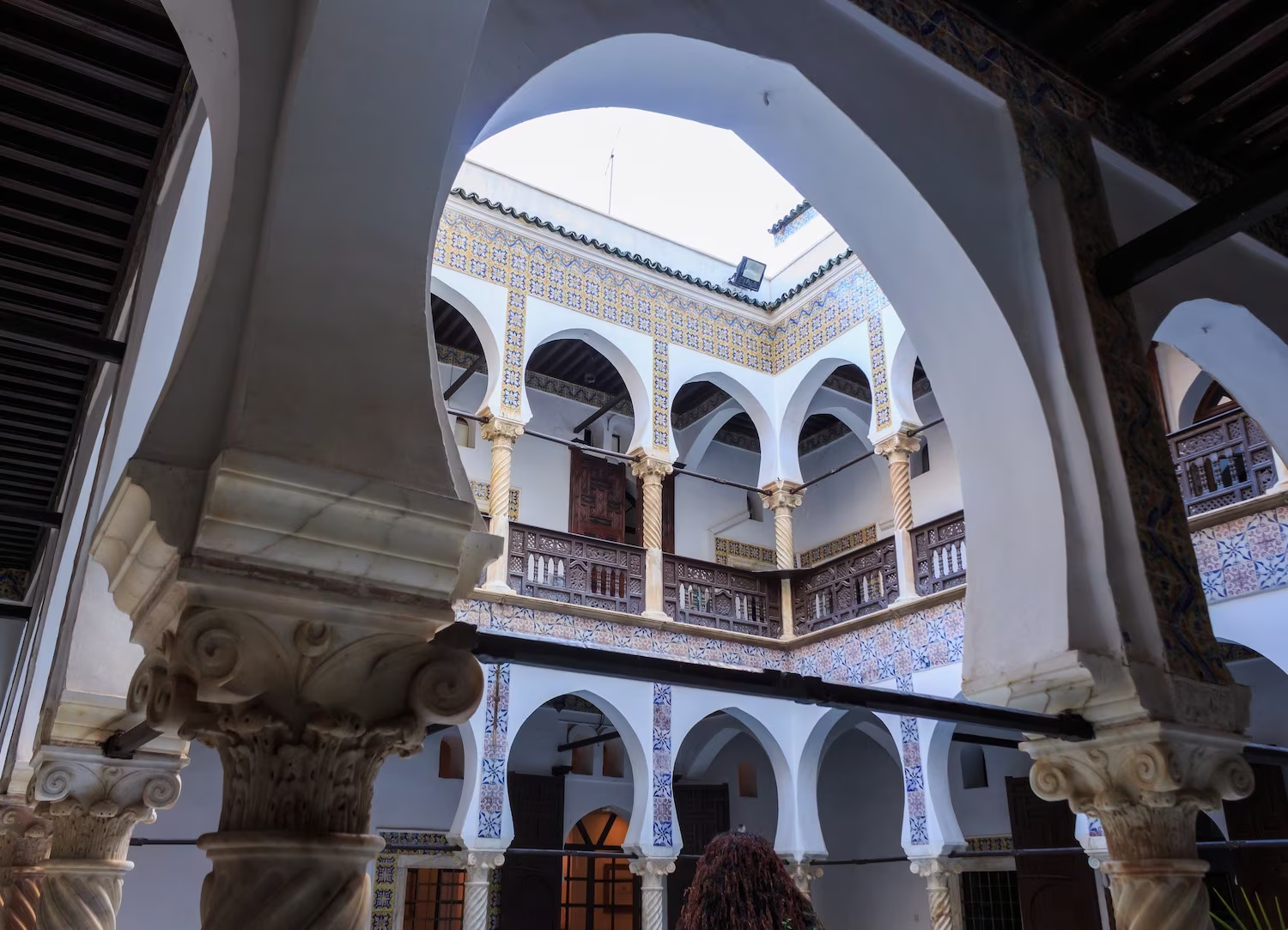
De Tipaza à Timimoun, quarante siècles entre Méditerranée et grandes dunes
Des amphithéâtres romains de Timgad aux dunes ocres de Timimoun, quarante siècles d'histoire algérienne.
Durée
17 jours
À partir de
2 870 €/pers.
Saisons idéales
Fév, Mar, Avr, Oct, Nov, Déc
Style
Circuit accompagné
Confort
classique
Voyageurs
Couple, Solo, Entre amis, senior, groupe
L’esprit du voyage
Des rives de la Méditerranée aux portes du Sahara, ce voyage vous invite à traverser l’Algérie du nord au sud, sur un itinéraire reliant Oran, Alger, Constantine, les Aurès, le M’Zab et le Grand Erg Occidental. En dix-sept jours, les paysages évoluent au fil des étapes, tout comme les cultures et les architectures qui témoignent de la diversité du pays.
Le voyage commence à Oran, marquée par les héritages andalou, ottoman, espagnol et français, avant de suivre la côte méditerranéenne vers Cherchell et Tipaza. Vous rejoignez ensuite Alger la Blanche, où vous découvrez notamment la Casbah, le Jardin d’Essai, la basilique Notre-Dame d’Afrique et le musée des Beaux-Arts. Cap ensuite vers l’est et les grands sites de l’Algérie romaine avec Djemila, puis Constantine, suspendue au-dessus des gorges du Rhumel, et Timgad. La route se poursuit à travers les Aurès, terre des Chaouias, en passant par les Balcons du Ghoufi et les gorges d’El Kantara, qui marquent progressivement l’entrée dans les paysages sahariens. Après Biskra et Bou Saâda, une autre facette du voyage se dévoile, celle des oasis et du désert. À Ghardaïa et dans la pentapole du M’Zab, vous découvrez les traditions urbaines et hydrauliques locales, avant de poursuivre à travers l’Erg Occidental jusqu’à El Goléa, puis vers Timimoun la Rouge, capitale du Gourara entourée de dunes et de palmeraies.
Cette traversée permet ainsi de découvrir, au fil d’un même voyage, cités antiques, villes méditerranéennes, montagnes, oasis, ksour et paysages désertiques, tout en prenant la mesure de la richesse culturelle et architecturale de l’Algérie.
Important : ce voyage est également proposé en 13 jours. Cette version s’achève à Ghardaïa, dans la vallée du M’Zab.
Les étapes de votre voyage
Points forts
Itinéraire jour par jour

Arrivée à Oran et premiers pas dans la ville
À votre arrivée à l’aéroport Ahmed Ben Bella d’Oran, notre équipe vous accueille à la sortie de l’avion et vous accompagne pour les formalités d’immigration et la récupération de vos bagages. Vous prenez ensuite la direction du centre-ville. Ce premier contact avec Oran la Radieuse, deuxième ville d’Algérie et port méditerranéen, vous plonge dans une ville façonnée au fil des siècles par les héritages andalou, espagnol, ottoman et français.
Selon votre horaire d’arrivée, profitez d’une balade sur le front de mer, avant de découvrir la place du 1er Novembre, également connue sous le nom de « place d’Armes ». Vous y découvrez la mairie et ses deux lions de bronze, le théâtre régional Abdelkader Alloula ainsi que la cathédrale du Sacré-Cœur, aujourd’hui devenue bibliothèque municipale.
En soirée, partagez un dîner d’accueil dans un restaurant typique du centre-ville d’Oran, avant de rejoindre votre hôtel pour la nuit.

Santa Cruz, Sidi El Houari et le quartier espagnol
Cette journée est consacrée à la découverte d’Oran, entre héritages ottoman et espagnol. Vous commencez par le fort de Santa Cruz, perché sur le Djebel Murdjadjo, avec une vue sur la baie, le port et la ville. Après la visite de la basilique, vous rejoignez le Palais du Bey, puis la Place d’Armes et les quartiers historiques d’Ekmul, Sainte-Eugène et du ravin Raz d’Aïn.
L’après-midi, direction le littoral ouest et la corniche d’Aïn El Türck, ponctuée de criques et de plages. Arrêt aux Andalouses, puis découverte d’El Ançor, au pied des montagnes, avant le retour à Oran en soirée.

De Cherchell à Tipaza, sur les traces de l’Algérie antique
Départ matinal en direction de l’est, en longeant la côte méditerranéenne. Vous quittez Oran et son arrière-pays viticole pour rejoindre le littoral algérois et Cherchell, l’ancienne Césarée de Maurétanie. Capitale du royaume de Juba II et de Cléopâtre Séléné, fille de Cléopâtre VII et de Marc-Antoine, au tournant de notre ère, Cherchell devint l’un des grands foyers culturels du monde berbéro-romain. Vous visitez le musée archéologique de Cherchell, réputé pour sa collection de sculptures antiques et son ensemble consacré à l’art gréco-romain africain. Vous découvrez ensuite les vestiges des thermes et de l’aqueduc qui alimentait autrefois la cité depuis les sources de l’Atlas.
Déjeuner à Cherchell.
Dans l’après-midi, vous poursuivez votre route jusqu’à Tipaza (ou Tipasa), ancienne ville phénicienne devenue colonie romaine et classée au patrimoine mondial de l’UNESCO. Dans un cadre méditerranéen où les vestiges descendent en pente douce jusqu’à la mer, vous découvrez le forum, le théâtre, la basilique chrétienne et la villa des Fresques.
Vous parcourez ainsi les lieux dans cette atmosphère qui inspira Albert Camus, qui aimait séjourner à Tipaza et évoquait ses « noces tyrrhéniennes ».

Alger la Blanche, de la Casbah à Notre-Dame d’Afrique
Visite matinale du Mausolée Royal de Maurétanie, dit « Tombeau de la Chrétienne » — appellation populaire trompeuse car ce monument funéraire monumental, surmonté d'un cône à degrés, abriterait les sépultures de Juba II et de Cléopâtre Séléné. Surplombant la mer depuis 261 mètres d'altitude, il fait écho au mausolée d'Imedghassen que nous découvrirons une semaine plus tard.
Vous prenez la route vers Alger la Blanche, capitale contemporaine bâtie en amphithéâtre sur la baie. À votre arrivée, déjeuner en ville avant de partir à la découverte de la capitale algérienne. L’après-midi est consacré à la visite de la Casbah d’Alger, médina classée au patrimoine mondial de l’UNESCO. Depuis le port jusqu’à la citadelle ottomane, cette cité fortifiée s’étend sur les hauteurs de la ville. Vous parcourez ses ruelles tortueuses, passages voûtés et escaliers, à la découverte du palais des Raïs (Bastion 23), de la mosquée Ketchaoua et d’anciennes demeures patriciennes turques.
En fin de journée, vous rejoignez les hauteurs de Bologhine pour découvrir la basilique Notre-Dame d’Afrique, accessible en téléphérique. Construite en 1872 par l’architecte Jean-Eugène Fromageau dans un style romano-byzantin, elle est considérée comme la sœur jumelle de Notre-Dame de la Garde à Marseille. Elle se distingue notamment par son abside tournée vers le sud-ouest, plutôt que vers l’est.

Alger, entre musées, Jardin d’Essai et centre historique
Cette journée complète à Alger débute par la visite du Musée National des Beaux-Arts, l’un des plus importants d’Afrique. Ses collections, allant du XIVᵉ au XXᵉ siècle, réunissent notamment peintures orientalistes, œuvres de l’École d’Alger et art moderne algérien. Vous rejoignez ensuite le Mémorial du Martyr (Maqam Echahid), monument emblématique érigé en 1982 pour le vingtième anniversaire de l’indépendance. Dominant la baie d’Alger, il se compose de trois palmes de béton hautes de 92 mètres. Vous poursuivez avec la visite du Musée National du Moudjahid, consacré à l’histoire de la guerre de libération.
Déjeuner dans un restaurant algérois.
L’après-midi, vous découvrez le Jardin d’Essai du Hamma, l’un des plus grands jardins botaniques d’Afrique. Créé en 1832 et étendu sur quarante hectares, il rassemble plus de 3 000 essences végétales, parmi lesquelles des palmiers royaux, des ficus géants, une bambouseraie et différentes plantes exotiques. C’est également ici qu’a été tourné Tarzan en 1932.
En fin de journée, partez pour une promenade dans le centre haussmannien d’Alger. Vous découvrez la Grande Poste, édifiée en 1910 dans un style néo-mauresque, puis la rue Didouche-Mourad, ancienne rue Michelet, les arcades et l’Horloge Florale.
Dîner dans un restaurant typique de la ville.

Entrée dans l'Algérie Romaine
Vous partez tôt le matin en direction de l’est par l’autoroute Est-Ouest. La route traverse les hauts plateaux et les piémonts atlasiques avant de vous conduire, à mi-parcours, jusqu’à Djemila, l’antique cité de Cuicul.
Classée au patrimoine mondial de l’UNESCO, Djemila est considérée par beaucoup comme l’un des plus beaux ensembles romains au monde. La cité antique se trouve à 900 mètres d’altitude, entourée de collines verdoyantes dont le paysage rappelle celui de la Toscane.
Déjeuner sur place.
L’après-midi, vous explorez le site en profondeur en compagnie de votre guide. La visite vous mène au forum civil, puis au forum sévérien, au capitole et au grand arc de Caracalla. Vous découvrez également le théâtre adossé à la colline, d’une capacité de 3 000 places, la basilique chrétienne et le quartier des Sévères, où se trouvent de riches villas.
Vous poursuivez avec le musée de Djemila, situé à l’entrée du site et abritant l’une des plus belles collections de mosaïques romaines au monde.
En fin d’après-midi, vous reprenez la route en direction de Constantine, située à environ 130 km, soit 1 h 45 de trajet. Vous arrivez à Constantine en début de soirée et rejoignez votre hôtel pour le dîner et la nuit.

Entre ponts suspendus et héritage de Cirta à Constantine
Cette journée est consacrée à la découverte de Constantine, l’antique Cirta, perchée sur son rocher au-dessus des gorges du Rhumel, profondes de plus de 200 mètres. Surnommée la « Ville des Ponts suspendus », elle se découvre au fil de ses différents quartiers et points de vue.
Le matin, vous parcourez les ponts emblématiques de Constantine : le pont Sidi M’Cid, le pont d’El Kantara, la passerelle Mellah Slimane et le pont Sidi Rached, qui offrent différents panoramas sur les gorges. Vous poursuivez avec la visite du palais Ahmed Bey, construit entre 1825 et 1835 et représentatif de l’architecture beylicale algérienne.
Déjeuner dans un restaurant traditionnel en ville.
L’après-midi, vous visitez le musée national Cirta, qui rassemble des collections d’archéologie, d’ethnographie et de beaux-arts, puis découvrez la Grande Mosquée, plus ancien édifice religieux de la ville.
Vous terminez la journée dans la Souika, vieux quartier populaire aux ruelles tortueuses descendant vers les gorges, pour découvrir une facette vivante de Constantine.

Timgad, découverte de la « Pompéi africaine »
Vous prenez la route vers le sud à travers les hauts plateaux des Aurès. Au fil du trajet, le paysage change progressivement : les terres irriguées du Tell laissent place à une vaste steppe préalpine, annonçant peu à peu le Sahara.
Vous arrivez à Timgad, l’antique Thamugadi, cité romaine fondée par l’empereur Trajan en l’an 100. Classée au patrimoine mondial de l’UNESCO et surnommée la « Pompéi africaine », elle dévoile aujourd’hui un vaste ensemble de vestiges romains.
Accompagné de votre guide, vous explorez la cité et son plan en damier, organisé autour du cardo maximus et du decumanus. La visite vous mène ensuite à l’arc de Trajan, au théâtre, au forum, au capitole, aux thermes, à la bibliothèque et à la basilique chrétienne. Sur le forum, une inscription résume avec humour un certain art de vivre romain : « Chasser, se baigner, jouer, rire, c’est cela vivre ».
Déjeuner sur le site, puis visite du musée de Timgad et de ses mosaïques.

Voyage vers Biskra
Visite matinale du Mausolée royal d'Imedghassen, monument funéraire numide datant du IIIᵉ siècle avant J.-C., probablement tombeau d'un roi numide ancêtre de Massinissa. Sa structure en cône à degrés et son tambour cylindrique sont l'archétype architectural dont s'inspirera, deux siècles plus tard, le Mausolée Royal de Maurétanie que nous avons découvert près de Tipaza. Le mettre en perspective côté oriental ferme symboliquement la grande boucle de l'Algérie antique.
Vous prenez la route vers le sud à travers les Aurès, terre des Chaouias, population berbère qui maintient vivantes ses traditions et sa langue. Au fil du trajet, le paysage devient plus minéral et les hauts plateaux laissent progressivement place aux gorges et aux falaises. Vous faites halte aux Balcons du Ghoufi, un profond canyon bordé de falaises ocres où d’anciens villages troglodytiques s’accrochent à la roche. Au fond des gorges, vous apercevez une palmeraie aménagée en terrasses, cultivée dans cet environnement escarpé. Déjeuner avec vue sur les Balcons du Ghoufi.
Vous poursuivez ensuite vers Biskra en passant par les gorges d’El Kantara, surnommées la « bouche du Sahara ». Le passage marque progressivement l’entrée dans un nouvel environnement : de l’autre côté de l’oued, le climat, la lumière et la végétation changent. Vous entrez désormais en pays saharien.
Arrivée à Biskra, surnommée la « Reine des Zibans » et connue dans toute l’Algérie pour ses dattes Deglet Nour.
Sur les pas d'Etienne Dinet
Tour de ville matinal à Biskra : visite de la palmeraie aux innombrables jardins clos par des murets de torchis, et découverte de la vieille ville. Biskra fut au XIXᵉ siècle une station d'hivernage prisée des aristocraties européennes — André Gide y séjourna et y écrivit certaines pages de son « Immoraliste ».
Vous prenez la route vers l’ouest à travers les hauts plateaux steppiques, en direction de Bou Saâda, surnommée la « Cité du bonheur ». Le trajet traverse des paysages sobres, entre steppes parsemées d’alfa, troupeaux de moutons et ksours en pisé.
Déjeuner en route.
Vous arrivez à Bou Saâda en milieu d’après-midi. Nichée au pied des monts Ouled Naïl, cette oasis fut un important foyer de l’orientalisme pictural au tournant du XXᵉ siècle. Le peintre français Étienne Dinet, devenu Nasreddine Dinet après sa conversion à l’islam, y vécut et y puisa une grande partie de son inspiration. En fin d’après-midi, profitez d’une découverte libre du ksar et de la palmeraie, avant le dîner et la nuit.

Entrée dans la pentapole
Matinée à Bou Saâda : visite du musée Étienne Dinet, qui conserve les œuvres du peintre, ses carnets, ses photographies, et témoigne de sa profonde immersion dans la culture saharienne. Découverte du vieux ksar et plus ample exploration de la palmeraie.
Déjeuner traditionnel à Bou Saâda.
Route vers le sud à travers les paysages steppiques de l'Atlas saharien. Nous franchissons un seuil géographique majeur en approchant de Laghouat — au-delà, c'est véritablement le Sahara qui commence. Les routes deviennent rectilignes, l'horizon s'ouvre, les premières grandes étendues désertiques apparaissent.
Arrivée à Ghardaïa en fin d'après-midi. Capitale de la vallée du M'Zab, territoire ibadite classé au patrimoine mondial de l'UNESCO depuis 1982, la pentapole mozabite est l'un des plus extraordinaires exemples au monde d'urbanisme spontané et fonctionnel. C'est ici que les Berbères ibadites — branche de l'Islam à part, formée au VIIIᵉ siècle —, refoulés du Maghreb central par les pouvoirs sunnites successifs, fondèrent au XIᵉ siècle un véritable archipel de cités fortifiées.
Installation en maison d'hôtes au cœur de la palmeraie. Dîner et premier contact avec l'architecture et la cuisine mozabites. Nuit.

Au cœur de la vallée du M’Zab
Cette journée vous plonge au cœur de la pentapole du M’Zab. Le matin, vous découvrez El Atteuf, la « doyenne des ksour » et premier établissement mozabite de la vallée, fondé en 1012. Vous visitez le mausolée de Sidi Brahim, reconnaissable à son architecture dépouillée, ses murs blancs et ses formes courbes. Le lieu inspira notamment Le Corbusier pour la chapelle de Ronchamp en Haute-Saône.
Déjeuner traditionnel mozabite chez l’habitant ou dans une maison d’hôtes.
L’après-midi, vous partez explorer Beni Isguen, cité fortifiée du M’Zab fondée en 1321. Sa visite s’effectue dans le respect des règles communautaires : présence d’un guide local, tenue couvrante et interdiction de photographier les personnes. Vous montez ensuite à la tour de guet de Bordj Boulila, qui offre un panorama sur la pentapole. Si votre passage coïncide avec la fin d’après-midi, vous assistez au marché à la criée, une vente aux enchères d’objets, de vêtements et de produits locaux organisée sur la place du marché. La découverte se poursuit dans les Jardins du Monde, avec une présentation du système traditionnel de partage des eaux permettant d’irriguer les palmeraies dans cet environnement aride.
Retour à la maison d’hôtes en début de soirée. Dîner et nuit.

Sur les premières dunes
Matinée à Ghardaïa proprement dit. Visite de la vieille ville, dominée par le minaret pyramidal de la Grande Mosquée du Ksar — imposant édifice construit sur le point le plus élevé de la colline, d'où l'on surveillait jadis les approches du désert. Flânerie dans le souk animé : galeries sous arcades, tapis berbères, poterie, dattes, épices, ferronnerie. Le commerce a toujours été l'âme de Ghardaïa, qui fut pendant des siècles un carrefour caravanier majeur entre le Sahel et la Méditerranée.
Découverte de Bounoura et Melika, qui complètent la pentapole. Melika est célèbre pour son vaste cimetière en terrasses tourné vers la vallée — les tombes alignées, sobres, créent une atmosphère méditative face à l'immensité du désert.
Route vers le sud-ouest en direction d'El Golé, asur le début de l'Erg Occidental. Le paysage change radicalement : la hammada (plateau caillouteux) cède peu à peu la place aux premières grandes dunes. Arrivée à El Goléa en fin d'après-midi. Visite du vieux ksar fortifié. Sortie en 4×4 pour le coucher de soleil sur le lac salé et les dunes environnantes — l'un des moments les plus magiques du voyage, quand les sables passent du doré à l'orange profond avant d'embraser tout l'horizon.
Dîner et nuit à El Goléa.

El Goléa: sur les traces de Charles de Foucauld
La matinée est consacrée à la découverte d’El Goléa. Vous visitez d’abord le vieux ksar, perché sur sa colline rouge, avant de rejoindre la chapelle qui abrite le tombeau du Père Charles de Foucauld. Transféré ici en 1929 depuis son ermitage de Tamanrasset, où il fut assassiné en 1916, Charles de Foucauld passa les vingt dernières années de sa vie au cœur du Hoggar. Celui qui aimait se définir comme un « frère universel » y réalisa notamment le premier dictionnaire touareg-français.
Déjeuner précoce.
Vous prenez la route vers l’ouest en direction de Timimoun, capitale du Gourara, par la Transsaharienne. Cette longue traversée vous conduit à travers les paysages du sud de l’Erg Occidental, où alternent regs, cordons de dunes et palmeraies-oasis qui apparaissent au creux des vallées. Vous arrivez à Timimoun « la Rouge » en fin d’après-midi. La ville, construite en pisé ocre, domine sa palmeraie et la sebkha, un lac salé asséché qui se dévoile sous les lumières du coucher du soleil. Vous découvrez également l’architecture soudano-saharienne caractéristique de Timimoun, avec ses façades crénelées, ses motifs géométriques en relief et ses portes ornées de motifs berbères.
Installation en maison d’hôtes. Dîner et nuit.

Exploration du Gourara et des oasis de Timimoun
Cette journée est consacrée à la découverte du Gourara, l’une des trois grandes oasis du Sud-Ouest algérien avec le Touat et la Saoura. Le matin, vous partez en 4×4 vers la palmeraie d’Ighzer et le village d’Ouled Saïd, un ksar aux murs en pisé rouge, ruelles voûtées et moucharabiehs sculptés. Vous traversez ensuite la sebkha, vaste étendue blanche de sel, avant de découvrir plusieurs ksour rouges installés au milieu des paysages de dunes. La journée vous permet également de découvrir le système traditionnel des foggaras : des galeries souterraines creusées pour capter l’eau et l’acheminer par gravité jusqu’aux palmeraies. Vous en apprenez davantage sur le partage collectif de l’eau, organisé grâce aux « peignes » appelés kasriya.
Déjeuner sous khaïma, dans une palmeraie ou au bord des dunes selon le programme.
L’après-midi, plusieurs activités sont proposées en option : balade à dos de chameau, tour en quad dans les dunes du Grand Erg Occidental ou simplement un moment consacré au coucher du soleil depuis une dune.

Retour vers le Nord
Matinée à Timimoun. Visite du « château rouge » — ancien hôtel Le Caïd, construit à l'époque coloniale dans le pur style soudano-saharien et qui reste l'emblème architectural de la ville. Découverte du marché de l'artisanat (vanneries, bijoux touaregs et zénètes, tissus indigo), promenade dans les ruelles de la vieille ville et sur la corniche qui domine la sebkha — ultime contemplation de ce paysage rouge et vert, ocre et bleu, qui n'existe nulle part ailleurs.
Déjeuner à Timimoun.
Transfert à l'aéroport et vol Air Algérie en fin d'après-midi pour Alger. Arrivée à Houari Boumediene en début de soirée et transfert à l'hôtel proche de l'aéroport. Dîner d'au revoir et nuit.
Note logistique pour le J16 (Timimoun → Alger)
Selon les rotations Air Algérie en vigueur à la date de votre voyage, le vol retour vers Alger pourra s'effectuer au départ de Timimoun (4 rotations hebdomadaires, vol direct de 1h 35 — environ 870 km) ou, si nécessaire, au départ d'Adrar (11 rotations hebdomadaires, vol direct de 1h 50 — environ 1 035 km).
Dans ce second cas, un transfert routier matinal Timimoun → Adrar de 220 km, soit environ 2h 30 de route à travers les paysages du Touat, sera organisé avant l'embarquement. Cette flexibilité nous permet de garantir le retour à la correspondance internationale prévue, quelle que soit la date de votre départ.

Au revoir Algérie
Petit-déjeuner à l'hôtel. Selon les horaires du vol retour, matinée libre pour de derniers achats au centre-ville d'Alger — le souk de la Casbah pour la maroquinerie, la rue Didouche-Mourad pour les pâtisseries, ou le Jardin d'Essai pour une dernière flânerie.
Transfert à l'aéroport international Houari Boumediene. Assistance aux formalités d'enregistrement et d'embarquement. Vol retour vers l'Europe.
Fin de nos services.
Tarif par personne
Tarif indicatif par personne, base chambre double. Chaque voyage est personnalisé selon vos envies.
Ce voyage peut être adapté selon vos envies
Cet itinéraire constitue une excellente base de découverte, mais il peut être entièrement personnalisé. Nos conseillers locaux construisent chaque voyage sur mesure selon votre budget, vos dates et vos envies.
Non inclus
- Les vols internationaux Europe → Oran et Alger → Europe
- Les frais de visa algérien (≈ 185 € à régler en espèces à l'arrivée selon procédure en vigueur)
- L'assurance voyage individuelle (annulation, rapatriement, bagages) — fortement recommandée
- Les boissons (eaux minérales hors trajets, sodas, jus, vin, bières) prises lors des repas
- Les dépenses personnelles, les communications téléphoniques et l'accès Internet
- Les pourboires au guide accompagnateur et au chauffeur (à votre discrétion, usage local)
- Les options proposées au programme (balade à dos de chameau, tour en quad dans les dunes)
- Tout ce qui n'est pas explicitement mentionné dans la rubrique « Le prix comprend »
Inclus
- L'accueil et l'assistance à l'arrivée et au départ aux aéroports d'Oran et d'Alger
- Tous les transferts aéroport / hôtel / aéroport en véhicule privatisé climatisé
- Le transport sur l'ensemble du circuit en véhicule récent et climatisé (minibus ou 4×4 selon la taille du groupe)
- Les sorties en 4×4 dans les dunes du Grand Erg Occidental (El Goléa et Timimoun)
- Le vol intérieur Air Algérie Timimoun → Alger (ou équivalent selon rotation)
- L'hébergement en chambre double dans les hébergements de charme indiqués au tableau ci-dessus — maisons d'hôtes traditionnelles, boutique-hôtels et hôtels de caractère privilégiés (16 nuits)
- La pension complète (du dîner du J1 au petit-déjeuner du J17), hors boissons
- Les services d'un guide accompagnateur francophone Détours Algérie sur l'ensemble du voyage
- Les services de guides culturels locaux sur les sites majeurs (Tipaza, Djemila, Constantine, Timgad, Beni Isguen)
- Tous les droits d'entrée sur les sites archéologiques, musées et monuments mentionnés au programme
- L'assistance pour l'obtention du laissez-passer délivré par les autorités algériennes (visa à l'arrivée)
- Les pourboires des guides locaux sur les sites
- Une bouteille d'eau minérale par jour et par personne durant les trajets
- L'assurance responsabilité civile professionnelle de Détours Algérie
Informations pratiques
L'inscription est considérée comme ferme et définitive après le versement d'un acompte de 30 % du prix total et l'acceptation des conditions particulières de vente.
Le solde doit être réglé au plus tard 45 jours avant la date de départ.
Consultez nos conditions particulières de vente pour le détail complet.
En cas d'annulation par le voyageur, les frais suivants sont retenus :
- Plus de 60 jours avant le départ : 40 % du prix total (acompte retenu)
- Entre 60 et 30 jours avant le départ : 50 % du prix total
- Moins de 30 jours avant le départ : 100 % du prix total
Nous recommandons vivement la souscription d'une assurance annulation. Consultez nos conditions particulières de vente pour le détail complet.
Les informations ci-dessous concernent les voyageurs ressortissants de l'Espace économique européen (EEE), de la Suisse et du Canada se rendant en Algérie dans le cadre d'un séjour touristique. Les règles d'entrée pouvant évoluer, nous vous recommandons de vérifier les informations auprès des autorités officielles avant votre départ.
Passeport
Pour entrer en Algérie, votre passeport doit être valide au minimum six mois après la date d'entrée dans le pays et comporter au moins une page vierge pour les tampons d'immigration.
Le document doit être en bon état (pas de pages détériorées, déchirées ou modifiées).
Visa
Les ressortissants de l'Espace économique européen, de la Suisse et du Canada doivent être en possession d'un visa valide pour entrer en Algérie dans le cadre d'un séjour touristique. Il n'existe pas d'exemption de visa pour ces nationalités.
Le visa doit être obtenu avant le départ, auprès de l'ambassade ou du consulat d'Algérie compétent selon votre pays de résidence. Il est conseillé d'en faire la demande plusieurs semaines à l'avance, les délais de traitement pouvant être variables.
Les documents généralement requis pour la demande de visa comprennent :
un passeport valide avec au moins six mois de validité résiduelle,
un formulaire de demande de visa dûment rempli et signé,
des photos d'identité récentes conformes aux normes requises,
un billet d'avion aller-retour ou une réservation,
une preuve d'hébergement (réservation d'hôtel ou invitation),
une preuve de ressources financières suffisantes pour la durée du séjour.
La durée de séjour autorisée est généralement de 30 jours, selon les conditions mentionnées sur le visa délivré.
Voyage avec des enfants
Les mineurs doivent être titulaires de leur propre passeport valide couvrant la durée du séjour.
Dans certains pays européens, lorsqu'un mineur voyage sans l'un de ses parents, une autorisation de sortie du territoire peut être exigée selon la réglementation du pays de résidence.
Santé
Aucune vaccination n'est officiellement exigée pour entrer en Algérie pour les ressortissants de l'EEE, de la Suisse et du Canada. Toutefois, il est recommandé de consulter un médecin ou un centre de vaccination avant le départ et de s'assurer que les vaccinations de base sont à jour (diphtérie, tétanos, poliomyélite, hépatite A).
Il est également conseillé de souscrire une assurance santé internationale couvrant les frais médicaux et le rapatriement pour toute la durée du séjour.
Autres nationalités
Les conditions d'entrée peuvent varier selon la nationalité. Les voyageurs concernés doivent se renseigner auprès de l'ambassade ou du consulat d'Algérie de leur pays de résidence.
Pour participer à nos voyages, il est fortement conseillé d'être assuré en assistance-rapatriement et frais médicaux à l’étranger.
Votre agence locale vous encourage à prendre connaissance du contrat spécifique élaboré avec notre partenaire CHAPKA ASSURANCES et AXA ASSISTANCE.
Pour souscrire à une assurance, connaître les garanties et les tarifs, suivez le lien ci-dessous.
CAP EXPLORER : La solution d’assurance complète conçue pour vivre sereinement votre voyage !
Choisissez la formule qui vous correspond le mieux:
Explorer'Multirisque
Explorer'Annulation
Explorer'Assistance
Explorer' Complémentaire Carte Bancaire
Spécifiques à nos voyages, nous suggérons fortement d’y souscrire.
Si vous choisissez de souscrire à l’une de ces formules, la convention détaillant l’ensemble des garanties et les modalités de déclaration du sinistre sont disponibles sur le site Internet de l'assureur.
Votre agence locale en aura connaissance, mais seul le participant est responsable du respect des procédures de déclaration de tout sinistre. Le participant doit donc conserver cette convention avec lui pendant toute la durée de son voyage.
Chapka — Cap Explorer
Notre partenaire assuranceVoyagez l’esprit tranquille avec notre partenaire Chapka. Annulation, rapatriement, frais médicaux, bagages… Toutes les garanties pour un voyage serein.
Partez en toute sérénité — je m’assureQuestions fréquentes

Parlons de votre aventure — Oran ouest
Conseiller, basé·e à Ghardaïa / M'zab (puis Alger à partir de 2006)
L'Algérie ne se raconte pas en quelques pages. Elle se vit, du Nord algérois aux oasis du M'zab, dans la rencontre, l'accueil et le partage. Notre rôle est simplement de vous en ouvrir les portes, à votre rythme.
— Louiza